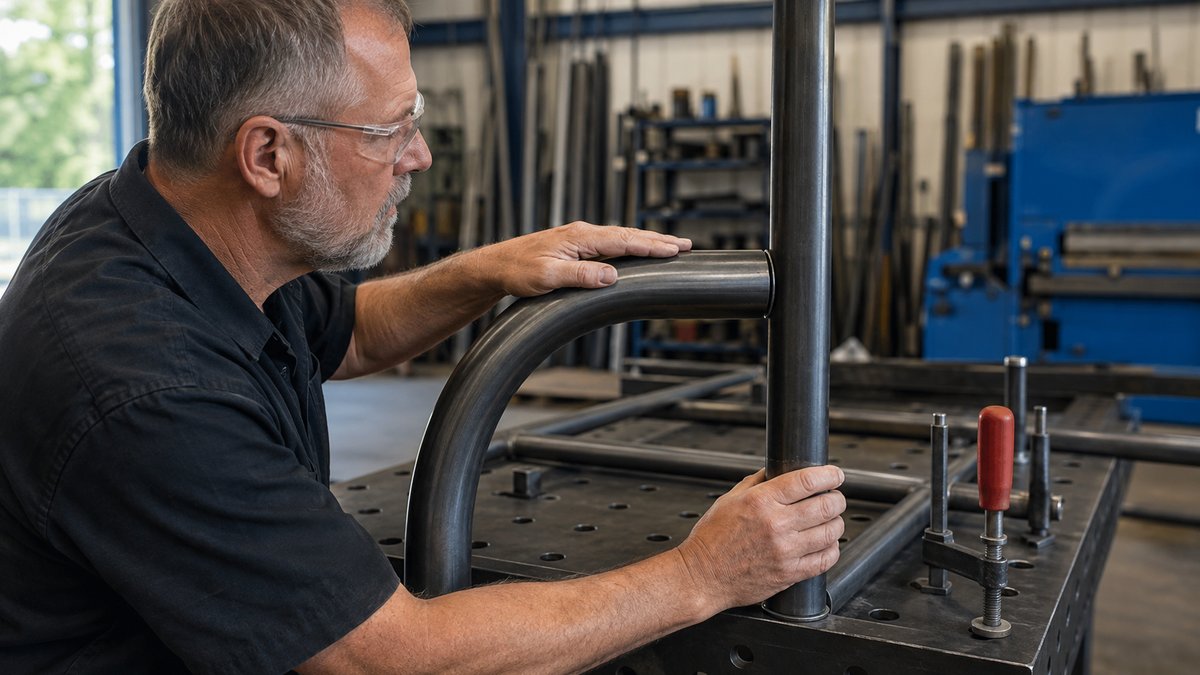
Tube Bending Design: Radius, Wall Thinning and Fit-Up
Tube bending design rules for engineers: centerline radius in D, wall thinning, springback, straight length and fit-up before tooling is committed.
Read more →
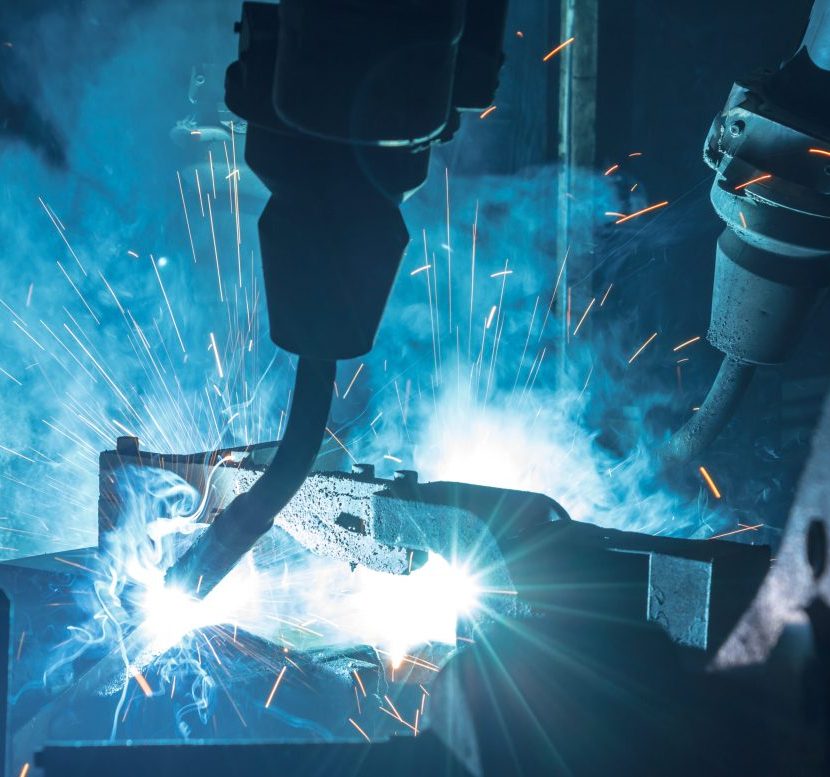
Press brake forming, tolerances, and finishing for formed metal parts.
Tube bending design rules for engineers: centerline radius in D, wall thinning, springback, straight length and fit-up before tooling is committed.
Read more →
Large format sheet metal design guide: where length limits come from, what a weld seam really costs, and how to keep long parts one piece.
Read more →
Master sheet metal bending with clear rules for bend radius, K-factor, and flange placement so parts come off the press brake right the first time.
Read more →
Individual part tolerances that appear reasonable in isolation can combine to create assembly problems when dimensional variations accumulate across...
Read more →
In the medical field, precision can be the difference between life and death. As technology advances, so do the standards for medical devices, with an...
Read more →
Close tolerance machining is revolutionizing the aerospace industry. In a field where even minor deviations can compromise safety, efficiency, or...
Read more →
Perfection is something that seemingly every single person on this planet seeks to achieve. Yet, we all know full well that we will never get there. For...
Read more →
Powder coating is one of the most powerful and versatile finishing methods that can be used on metal components in modern manufacturing. Using different...
Read more →
Thanks to its tremendous durability, incredible versatility, and unbeatable strength, stainless steel is a go-to choice for a number of products in...
Read more →Need custom-formed metal parts with tight tolerances? See what our Precision Forming team can do, or keep exploring related articles below. Precision Forming
Forming metal isn't as simple as folding paper. When a press brake bends a piece of sheet metal, the material stretches on the outside of the bend and compresses on the inside. Understanding how this affects your final part dimensions is critical for successful design.
To get an accurate final dimension, you must account for bend allowance (the amount of material consumed by the bend) and bend deduction (the difference between the sum of the flange lengths and the flat pattern length). These values change based on material type, thickness, and the inside bend radius.
After the press brake releases pressure, the metal will naturally spring back slightly toward its original flat shape. Harder materials like stainless steel exhibit more springback than softer materials like aluminum. Our advanced Trumpf press brakes automatically calculate and compensate for springback, but it's a factor engineers must be aware of.
To avoid rework, ensure your inside bend radius is at least equal to the material thickness (ideally larger). Keep holes and cutouts away from the bend line to prevent them from distorting during the forming process. A good rule of thumb is to keep features at least 2.5 times the material thickness plus the bend radius away from the bend line.
What it takes to design, quote, and build custom fabricated parts and assemblies.
View Articles →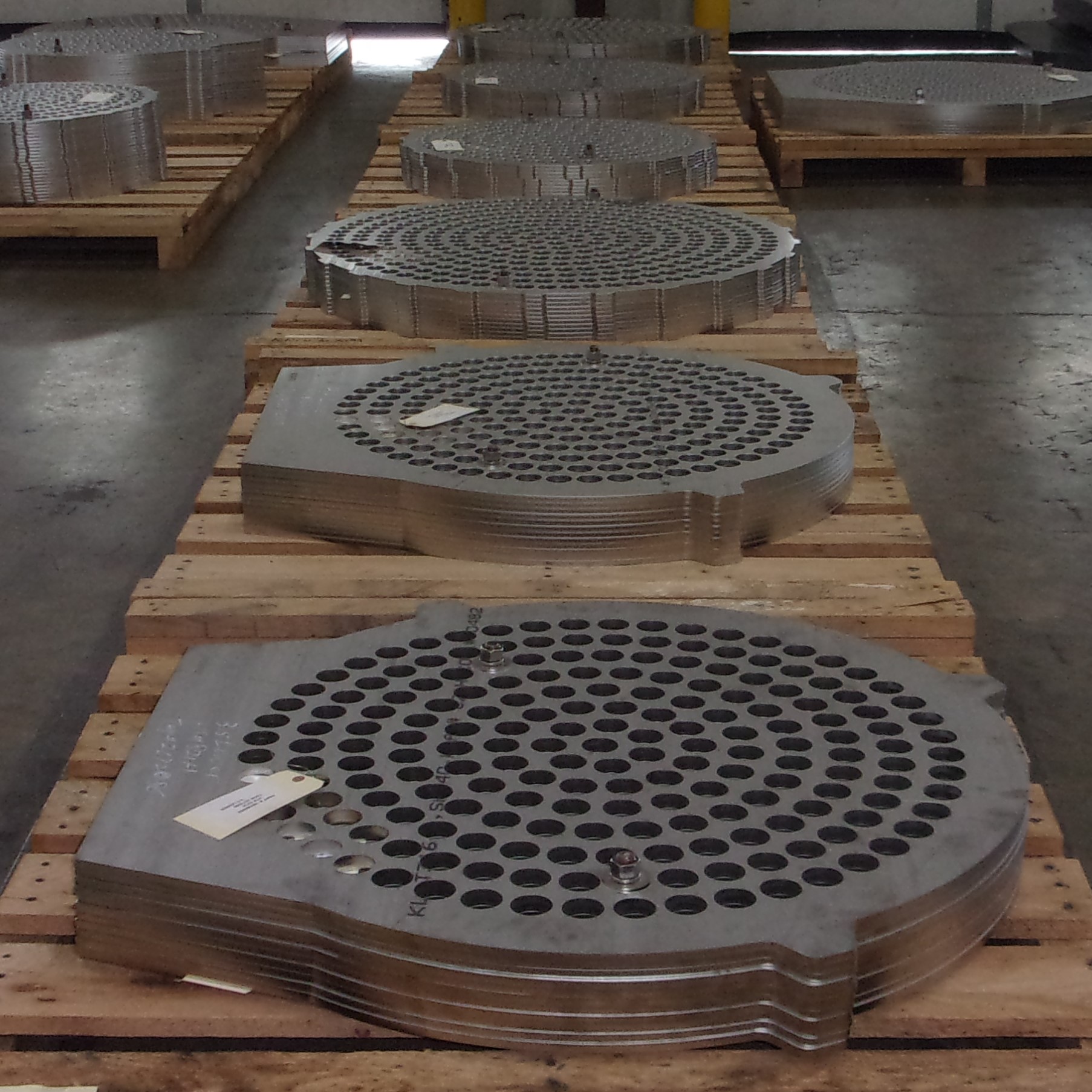
How laser cutting works, what it's good for, and how to get the most out of it.
View Articles →
Turning an existing part into usable data, drawings, and production-ready files.
View Articles →

Getting from concept to a physical part fast, before committing to full production.
View Articles →
Welding processes, techniques, and what to know before a welded assembly goes into production.
View Articles →

Fun, hands-on engineering projects and ideas for curious minds of any age.
View Articles →New equipment, new capabilities, new projects — here's what we've been building lately.
View Articles →Get new articles on fabrication, welding, and manufacturing sent straight to your inbox.